Essay / EN
The Grand Inquisitor in the Age of Algorithms
Dostoevsky's Grand Inquisitor prophetically describes our algorithmic society — humanity trading freedom for bread, miracles, and authority, one dopamine hit at a time.
I spent three hours last night watching YouTube videos about the Byzantine Empire's coinage system — a topic I didn't know existed and will never think about again. The feed — or the algorithm, as those who've never cracked open a novel call it — knew I'd click, knew I'd stay, knew I'd surrender my evening to a parade of increasingly obscure historical minutiae. Dostoevsky's Grand Inquisitor would have been proud: I traded my freedom for bread, and I didn't even have to leave my bed.
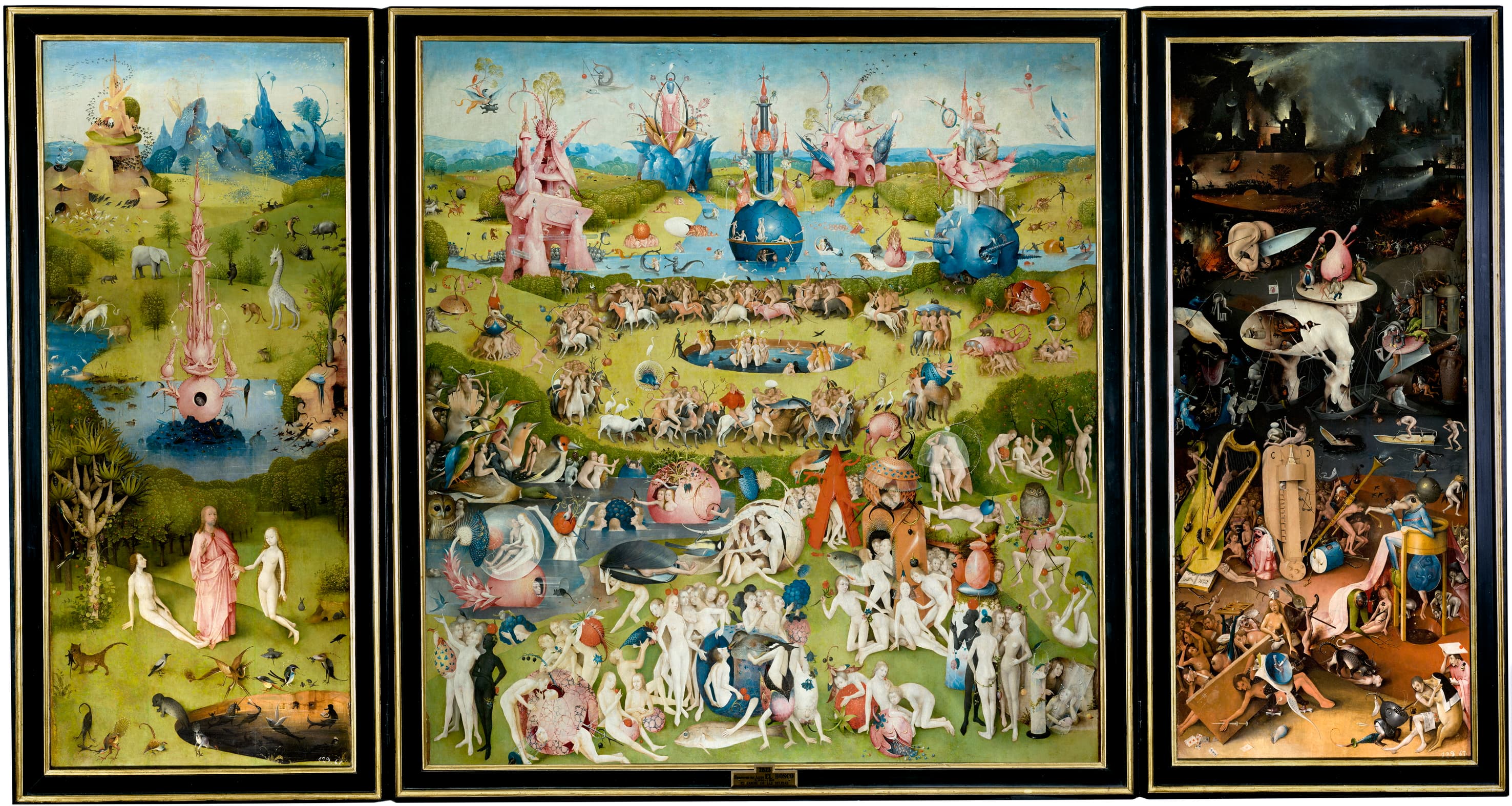
🇳🇱 Hieronymus Bosch - The Garden of Earthly Delights (1500)
The Grand Inquisitor: Dostoevsky's Parable of Freedom
There is a chapter in The Brothers Karamazov that I keep returning to the way one returns to a wound. Book Five, Chapter Five — "Великий инквизитор" (Velikiy Inkvizitor) — The Grand Inquisitor. I have read it perhaps a dozen times, and each time it leaves me more unsettled than the last. Dostoevsky had a talent for making you feel philosophically homeless.
The setup is deceptively intimate. Two brothers in a tavern. Ivan, the intellectual, the rationalist, the one who has decided that if God exists then His world is unacceptable, tells his younger brother Alyosha — the novice monk, the believer — a "poem" he has composed. It is not really a poem. It is a trap dressed in narrative clothing. Ivan sets his parable in sixteenth-century Seville, during the Inquisition, on a day when nearly a hundred heretics have been burned "ad majorem gloriam Dei." Into this Seville walks Christ himself, quietly, and yet the people recognize him. He heals the blind. He raises a child from the dead. And the Grand Inquisitor — a cardinal, ninety years old, withered and immense — sees Him and orders His arrest.
What follows is one of the most devastating monologues in all of literature. The Inquisitor visits Christ in His cell and explains, with terrible patience, why Christ was wrong. The argument hinges on the three temptations from the wilderness — when the devil offered Christ bread to turn stones into food, the spectacle of throwing Himself from the temple to be caught by angels, and dominion over all the kingdoms of the earth. Christ refused all three. The Inquisitor says this refusal was catastrophic.
Bread — хлеб (khleb) — represents material comfort, the satisfaction of need. Miracle — чудо (chudo) — represents spectacle, the hunger for wonder that keeps people obedient. Authority — авторитет (avtoritet) — the surrender of freedom to a power that will decide for you. The Inquisitor tells Christ that by refusing these tools, He overestimated humanity. He gave them freedom they never wanted.
Why does Ivan tell this to Alyosha? Because Ivan loves his brother, and love, as Lacan knew, is always giving someone something you do not have. Ivan does not have faith. What he has is a rebellion so precise, so architecturally sound, that it terrifies him. The parable is Ivan's confession: he cannot accept a world where children suffer, he cannot accept a God who permits it, and he cannot stop longing for something beyond his own reason. The Grand Inquisitor is Ivan's mirror — a man who once believed and chose to build a world without the unbearable weight of divine freedom.
Dostoevsky, who had stood before a firing squad and been reprieved at the last second, who had spent years in a Siberian labor camp, who gambled compulsively and buried children of his own — Dostoevsky understood that faith and reason do not occupy separate rooms. They share a bed, and they keep each other awake at night.
"Miracle, Mystery, and Authority" — Dostoevsky's Prophecy
"Чудо, тайна и авторитет" (Chudo, tayna i avtoritet) — miracle, mystery, and authority. The Inquisitor names these as the three forces that could have enslaved humanity benevolently, had Christ accepted the devil's offer. The argument is not made with cruelty — that is what makes it disturbing. The Inquisitor speaks with something resembling love, or at least its institutional counterfeit.
His central claim: human beings cannot bear freedom. "Нет заботы беспрерывнее и мучительнее для человека, как, оставшись свободным, сыскать поскорее того, перед кем преклониться" — "There is no more ceaseless or tormenting care for man, once free, than to find someone to worship as quickly as possible." Give them bread, and they will hand you their liberty with gratitude. Give them miracles, and they will never question your authority. Give them a structure that absolves them of choice, and they will call it paradise.
I think about this at three in the morning when I cannot sleep and the feed has decided what I need is another video, another article, another small dopamine communion. The Inquisitor did not need Silicon Valley. He understood the mechanism centuries before the feed existed.
Dostoevsky explored this territory in Notes from Underground, where his narrator — that spiteful, toothaching creature beneath the floorboards of polite society — rages against the Crystal Palace. The "Хрустальный дворец" (Khrustalny dvorets) was Chernyshevsky's utopia: a rational society where all needs are met, suffering unnecessary. The Underground Man's objection is almost biological: "Человеку надо — одного только самостоятельного хотения" — "Man needs only one thing — his own independent wanting." Even if irrational. Even if ruinous. The capacity to want something stupid, something no feed could predict — that is what makes us human and not piano keys.
The Grand Inquisitor is Chernyshevsky's Crystal Palace given a cassock and a cardinal's ring. He has built the optimized world, removed the suffering. And in doing so, removed something essential — that sacred capacity for free choice Dostoevsky believed was the image of God in man, whether God existed or not.
There is a word in Russian that has no adequate translation: тоска (toska). Nabokov called it "a sensation of great spiritual anguish, often without any specific cause." It is not sadness, not melancholy. It is a longing for something you cannot name, directed at something that may not exist. I have felt it many times — in foreign cities where no one knows my name, in the gap between who I am and who I was supposed to become. I think Dostoevsky wrote the Grand Inquisitor out of тоска. Not for God exactly, and not against God, but toward the space where God should be and might not be, that aching absence no amount of bread or miracle or authority can fill. The Underground Man thrashes against the Crystal Palace; Ivan Karamazov builds a parable around his wound. Both articulate the same thing: a world that has solved every problem except the problem of meaning has solved nothing at all.
Bread — The Feed Nourishes Us
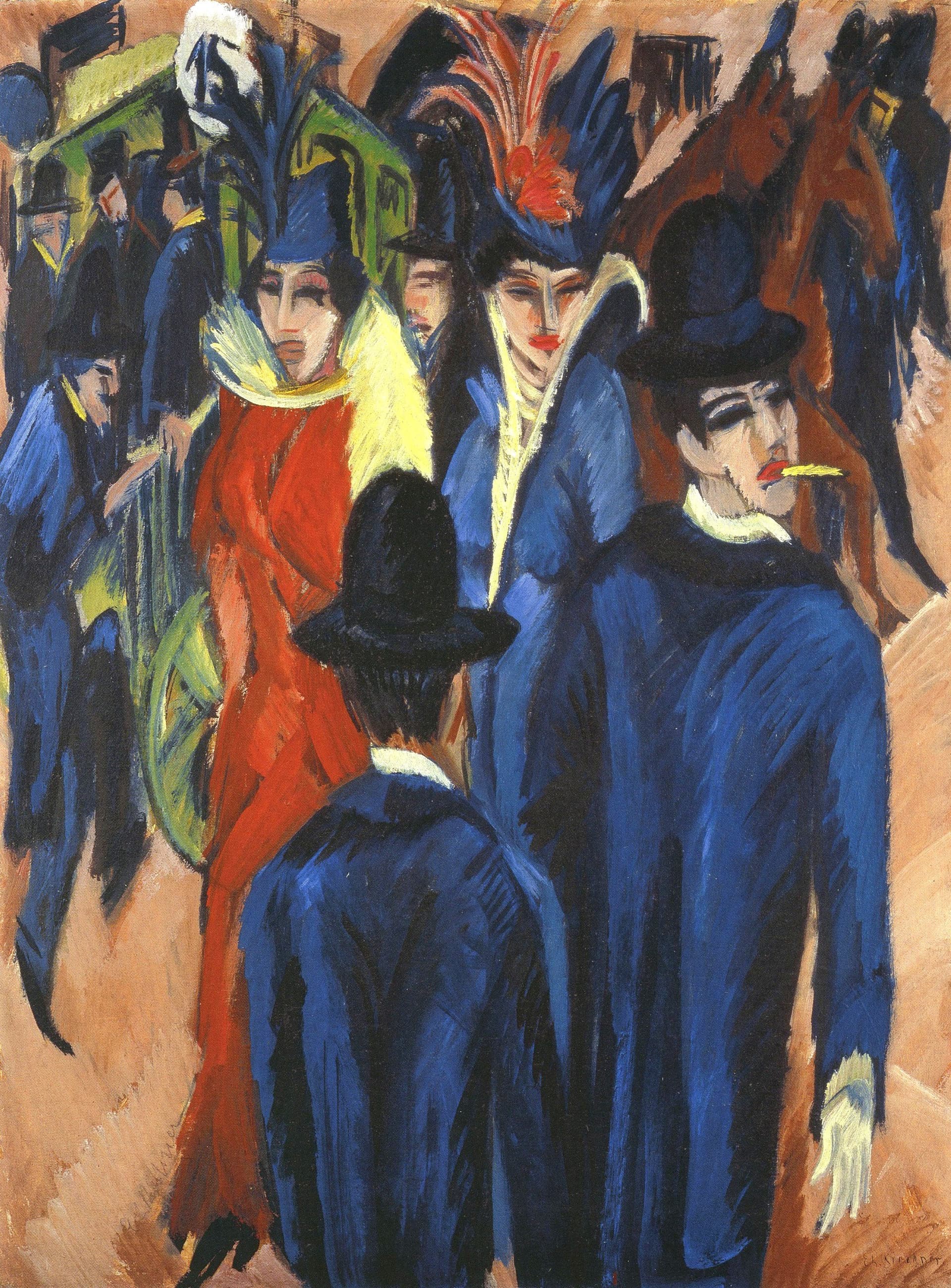
🇩🇪 Ernst Ludwig Kirchner - Berliner Straßenszene (Berlin Street Scene) (1913)
There is a moment in The Brothers Karamazov when the Grand Inquisitor looks at the silent Christ and says, essentially: You fool. You offered them freedom when what they wanted was bread. I think about this every morning at 6:47 a.m., which is when my phone tells me — without my having asked — that traffic to my office will take twenty-three minutes and that the weather in Mexico City is 17°C with a chance of rain. I did not request this information. But I have been fed it, and I consume it, and I am grateful in the way a dog is grateful, which is to say: completely and without reflection.
This is the bread. Not flour and water, but convenience. Frictionlessness. The quiet hum of a life optimized. Shoshana Zuboff named it with clinical precision in The Age of Surveillance Capitalism: we are not the customers of Google, Amazon, Meta. We are the raw material. Our clicks, our hesitations, the three seconds we linger on a photograph of someone we once loved — all of it is extracted, refined, and sold. The product is prediction. The product is us. And in exchange, we receive bread: a seamless feed, a recommendation engine that knows we are sad before we do, a map that reroutes us around traffic as though inefficiency were a kind of sin.
I want to say I resist this. I want to tell you I am the kind of person who reads Dostoevsky in crumbling paperbacks and distrusts the cloud. But I would be lying. My Spotify Wrapped told me I listened to 47,000 minutes of music last year, and I felt — God help me — proud. I shared it. I let the feed narrate my interior life back to me in pastel infographics, and I thought: yes, this is who I am. Guy Debord warned us about this in 1967. We no longer merely live; we consume our own lives as images and then offer those images back to the crowd for confirmation.
And here is where it gets ugly, where it gets personal, where I feel the hot shame of recognition: scrolling my feed at one in the morning feels exactly like Alexei at the roulette table in The Gambler. That same fevered compulsion. That same knowledge that the next spin will yield nothing — that it has yielded nothing the last forty times — and yet the hand moves. The thumb swipes. Dostoevsky understood gambling not as vice but as metaphysics: the desperate belief that the next moment will redeem all the empty ones before it. Instagram operates on the same principle. The next post might be the one that makes me feel something. It never is. I keep scrolling.
The Grand Inquisitor understood what Silicon Valley would later prove empirically: give people bread, and they will give you everything. Their data. Their attention. Their dignity. Their freedom. They will hand it over with both hands and thank you for taking it.
Miracle — The Spectacle of the Feed
The Grand Inquisitor's second gift is miracle — not the divine kind, but the theatrical kind. The spectacle that stupefies. The crowd does not need God; it needs to be amazed.
Open TikTok. Tell me that is not a cathedral of miracles.
A teenager in Guadalajara lip-syncs to a sound bite and is seen by eleven million people. A man power-washes a driveway and the video generates more engagement than most novels will in a century. We do not watch content that merely represents life anymore. We watch content that begins to replace it. An influencer's curated morning routine — the matcha, the journaling, the golden light through linen curtains — is not just a depiction of a life. It becomes the standard against which actual mornings are judged and found wanting.
And here is the engineered miracle beneath the miracle: the dopamine loop. Every pull-to-refresh is a slot machine lever. Variable ratio reinforcement — the same mechanism that kept Alexei at the table, the same mechanism that makes rats press levers until they die. The Silicon Valley engineers know this. They have read B.F. Skinner more carefully than they have read anything else. The miracle is not that the content is extraordinary. The miracle is that we cannot stop looking.
Dostoevsky saw this building. In Notes from Underground, his unnamed narrator rages against the Crystal Palace — that monument to Victorian rationalism, to the idea that human life could be perfected through engineering and glass. The Crystal Palace promised a world so rationally organized that suffering would be eliminated. The Underground Man's response was essentially: I would rather suffer freely than be happy in your machine. But the Crystal Palace has been rebuilt. It is in our pockets. It is made not of glass but of code, and it is far more seductive than anything the Victorians imagined, because it does not merely organize the world — it generates a new one, infinite, personalized, and impossible to leave.
Authority — We Beg to Be Governed
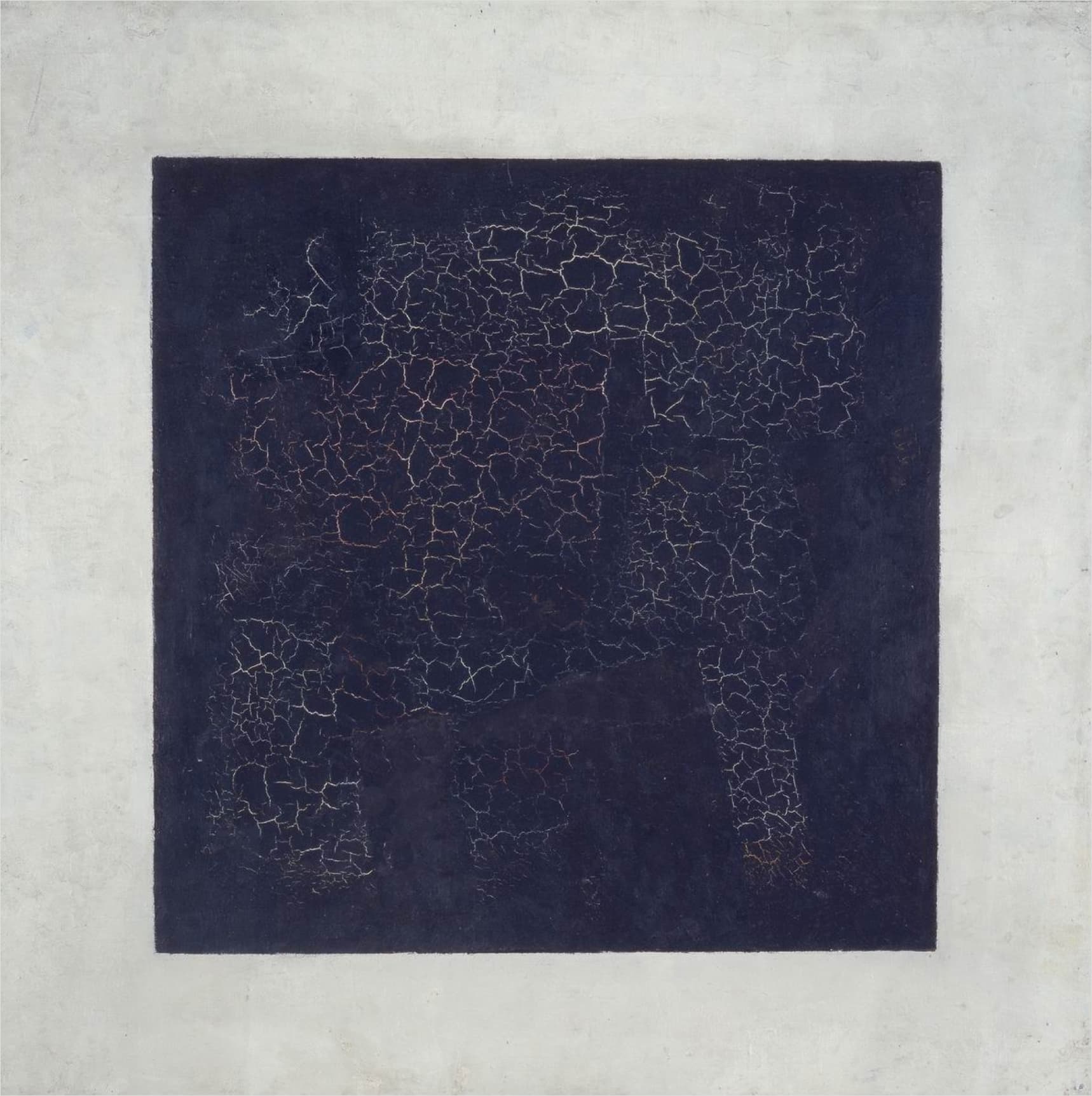
🇺🇦 Казимир Малевич - Чёрный квадрат (Kazimir Malevich - Black Suprematic Square) (1915)
And now we arrive at the cruelest of the Inquisitor's gifts: authority. Someone to obey.
"They will bring us their freedom," the Inquisitor tells the silent Christ, "and lay it at our feet, and say: 'Make us your slaves, but feed us.'" When I first read this at nineteen, in a borrowed apartment where my grandmother's Arabic mixed with my mother's Spanish on the phone, I thought it was a portrait of political tyranny. Dictators. Strongmen. The obvious villains. I did not understand — could not yet understand — that the most effective authority is the kind you do not recognize as authority at all.
I let Netflix choose what I watch. Not occasionally — routinely. I let Spotify generate my playlists. I let Amazon recommend my next book. I let Google autocomplete my thoughts, which is to say: I let the feed finish my sentences, and I accept its suggestions with the same docility the Inquisitor predicted. The new authority does not arrive in a uniform. It arrives as convenience. It does not shout. It recommends. It does not punish. It optimizes. Because it comes to us through pleasure rather than pain, we rarely experience it as domination. We experience it as care.
This is the Inquisitor's genius, and it is Zuckerberg's genius, and it is the genius of every recommendation engine that has ever told you people who liked this also liked that: the authority is invisible because it feels like freedom. I choose from a menu I did not write. I desire what I have been shown. I mistake curation for autonomy and call it preference.
So here is the provocation I cannot resolve, the question that keeps me up past the reasonable hour, scrolling the feed I know is feeding on me: Is resistance even possible when the tool of resistance is also the tool of capture? When I write this essay on a laptop, publish it through a platform that will distribute it through opaque digital machinery, and you read it on a phone that is, at this very moment, cataloguing your attention — who among us is the Underground Man, raging against the Crystal Palace from inside it? Or have we all, every one of us, already laid our freedom at their feet and called it progress?
The Silent Christ
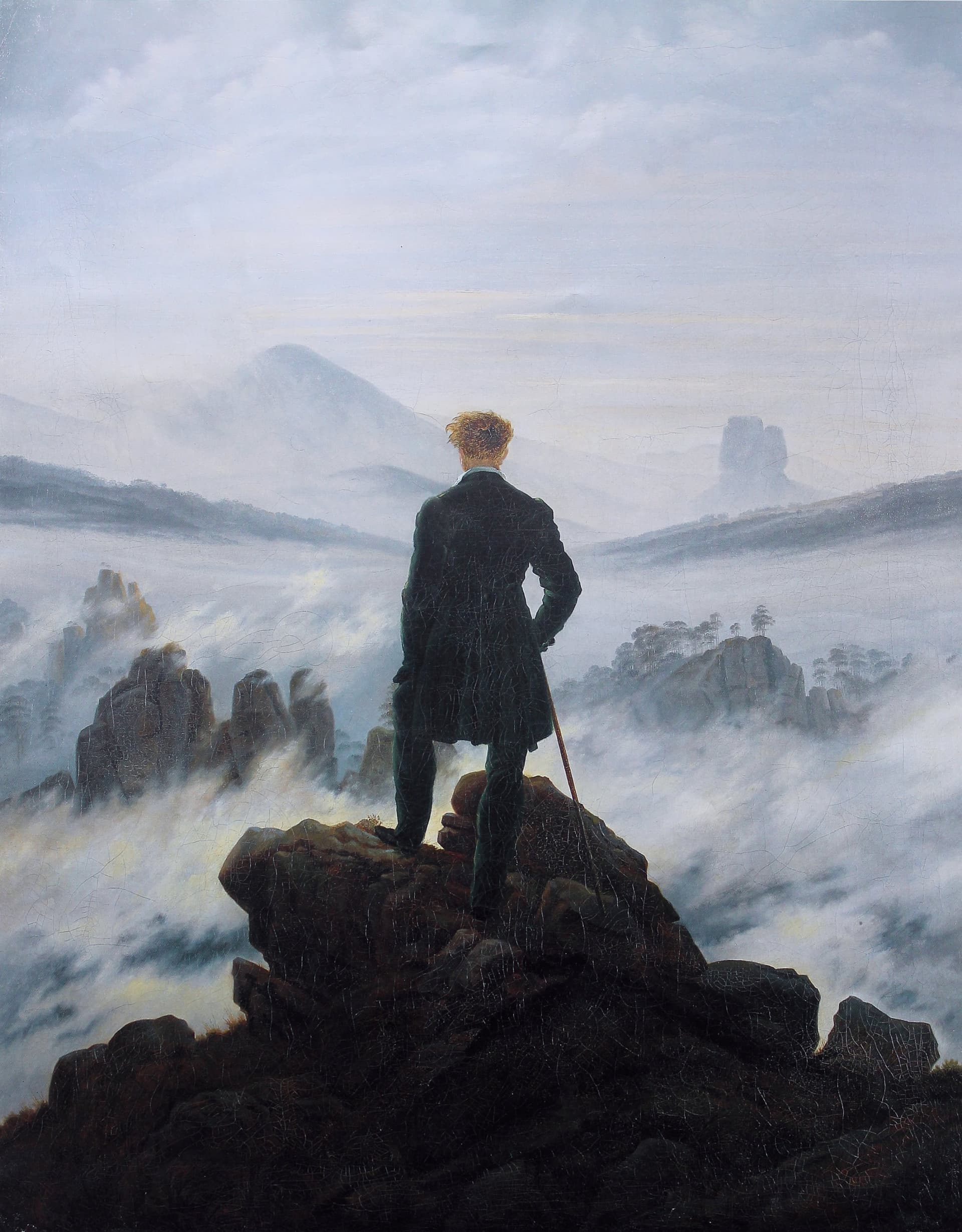
🇩🇪 Caspar David Friedrich - Der Wanderer über dem Nebelmeer (Wanderer above the Sea of Fog) (1818)
And then there is the silence.
Throughout the Inquisitor's monologue — dense, relentless, exquisitely reasoned — Christ says nothing. Not a word. The old cardinal lays out his case with the rigor of a prosecutor and the sorrow of a confessor, and Christ simply listens. Dostoevsky gives the Inquisitor every rhetorical advantage: the logic, the evidence, the centuries of human history that seem to confirm his thesis. Christ gets silence.
I have thought about this silence for years. It would have been easy for Dostoevsky to put a rebuttal in Christ's mouth. A devastating counter-argument. He does not. And in refusing to do so, he achieves something miraculous in fiction: the silence becomes the answer. Christ's wordlessness is not defeat. It is a refusal to engage on the Inquisitor's terms — the terms of reason, of calculation, of institutional power. Silence operates in a register that argument cannot reach.
And then the kiss. Christ rises, approaches the old man, and kisses him softly on his "bloodless, aged lips." That is all. The Inquisitor shudders. He opens the cell door and tells Christ to go and never return. But the kiss — "поцелуй" (potseluy) — burns in his heart.
Alyosha recognizes it immediately. "That's plagiarism!" he tells Ivan, laughing. "You stole that from Christ!" And here is the blade in the final lines: Ivan smiles. Because Ivan, who does not believe, has written a parable in which the only answer to the most devastating critique of God is wordless love. Somewhere beneath the architecture of his rebellion, something persists — something that looks, terribly, like faith. The kiss does not refute the Inquisitor's argument. It transcends it. It says: I know everything you have said, and I love you still. Against that, even the most perfect system has no defense.
Living in the Inquisitor's Cathedral
Jacques Lacan wrote that desire is always the desire of the Other — we don't want what we want, we want what we think the Other wants us to want. The feed has become our ultimate Other, shaping our desires before we even know we have them. I know this. I understand the Grand Inquisitor's trick. And yet here I am, phone in hand, scrolling through my feed, waiting for the next miracle, accepting my bread, surrendering to the authority of the recommendation engine.
The Grand Inquisitor would not be surprised. He would, I think, be bored. He told us exactly what would happen. We read the chapter. We taught it in universities. We wrote essays about it. And then we unlocked our phones and proved him right.
But maybe there is something in the silence. Maybe the answer to the feed, like the answer to the Inquisitor, is not a counter-argument but a different kind of presence. Not logging off — I am not naive enough to prescribe digital asceticism from within the machine. But something quieter. The choice to sit with тоска instead of scrolling past it. The refusal to let the feed finish your sentence. The terrifying, sacred, stupid act of wanting something it cannot predict.
Dostoevsky's Christ remained silent because there was nothing to say. Perhaps our version of the kiss is simpler: to close the app, to sit with the discomfort, to let the ache be the ache without reaching for the next distraction. To choose, even briefly, the unbearable weight of our own freedom.
I know this. I wrote this. And tonight, probably, I will forget it all and scroll until three in the morning, looking for Byzantine coins.
Filed under
Keep reading